How to Stir-Fry Vegetables So They Stay Crisp (Not Soggy)

You hear the sizzle the second the vegetables hit the pan. That loud, aggressive hiss is the sound of a proper stir-fry. But somewhere between the chopping and the sauce, something goes wrong. Your broccoli turns limp. Your carrots stay raw. And that vibrant green pepper turns a sad, muted olive.
The problem is not your recipe. It is the technique.
Restaurant stir-fries taste different because the vegetables hit extreme heat for a very short time. That quick blast of heat locks in moisture and creates that smoky char chefs call wok hei, or “breath of the wok” . At home, most stoves cannot hit those temperatures. So the vegetables sit in the pan, release their water, and steam instead of sear.
The fix is not a better wok. It is a few small changes to how you prep, heat, and load the pan. This guide walks you through every step. By the end, you will know exactly why your stir-fry turns out soggy and how to make it crisp every single time.
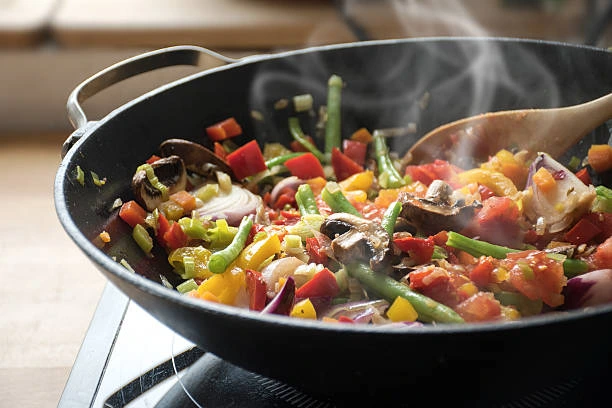
Why Your Stir-Fry Turns Soggy (And How to Stop It)
Vegetables are mostly water. Broccoli is over 70 percent water. When you drop wet vegetables into a lukewarm pan, that water comes out and pools at the bottom. The vegetables sit in that liquid and basically braise. Braising makes them soft and dull .
The solution is heat and speed. You want the pan so hot that the water evaporates on contact. You want the vegetables to sear on the outside before they have time to release their moisture. And you want to cook them in small enough batches that the pan never loses its heat.
This is why restaurant stir-fries taste different. The chef controls the heat, the batch size, and the timing. You can do the same thing at home. It just takes a shift in how you think about the pan.
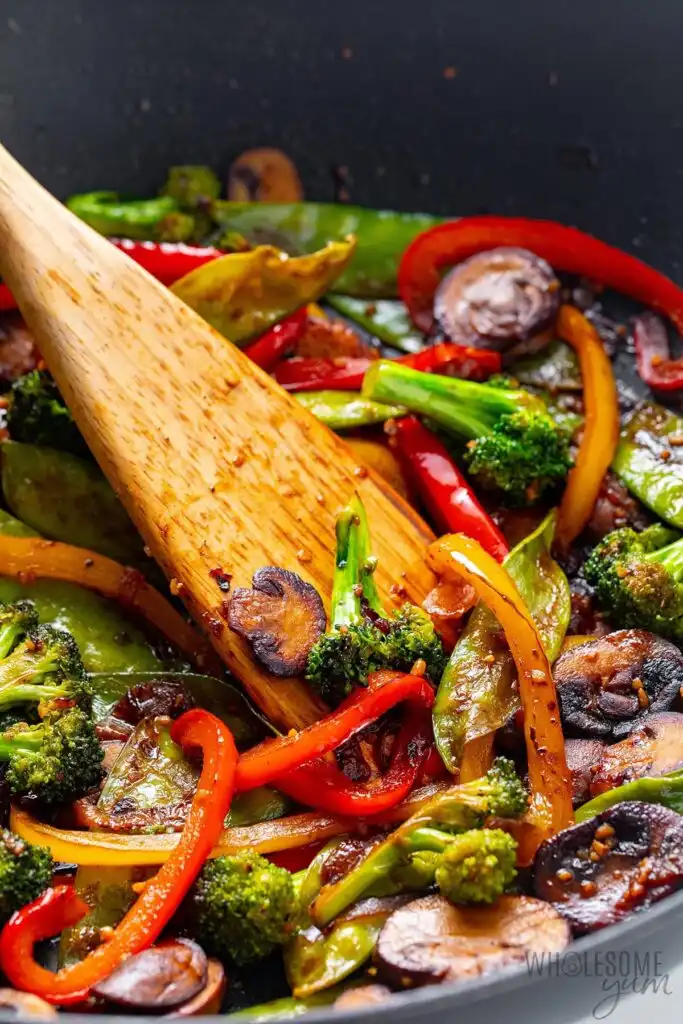
The 3 Rules That Separate Crispy Vegetables From Mushy Ones
Three things matter more than any ingredient or sauce. Get these right, and everything else falls into place.
Rule 1: Dry Your Vegetables Completely
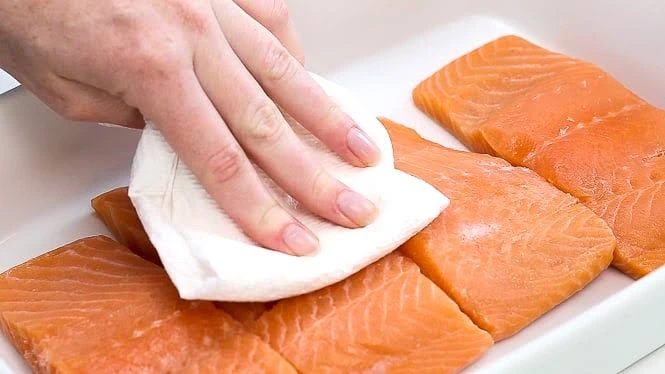
Water is the enemy of crisp. After you wash and chop your vegetables, pat them dry with a clean kitchen towel or run them through a salad spinner. Every droplet of water on the surface has to evaporate before the vegetable can start to sear. That evaporation takes energy. If there is too much water, the pan temperature drops and the vegetable steams instead .
For leafy greens like bok choy, dry each leaf individually. For broccoli, dry the florets well, especially in the little crevices where water hides.
Rule 2: Get the Pan Screaming Hot Before Anything Goes In
A proper stir-fry pan should be heated until it just begins to smoke. Only then do you add the oil. This is the opposite of how most people cook. They add oil to a cold pan and wait for it to heat up. That method works for eggs. It fails for stir-fry .
The pan needs to be so hot that a drop of water sizzles and evaporates instantly. If you have a carbon steel wok or a cast iron skillet, you can get it very hot. A nonstick pan will not reach the same temperature, but you can still get it hot enough to sear if you preheat it long enough .
Add the oil after the pan is hot. Swirl it around. It should shimmer immediately. If it does not, the pan is not hot enough yet.
Rule 3: Never Crowd the Pan
This is the mistake almost everyone makes. You want to cook a big pile of vegetables all at once. The pan can not handle it. When you add too much food, the temperature crashes. The vegetables release water faster than the pan can evaporate it. Everything steams .
The solution is batch cooking. Cook the hard vegetables first. Remove them. Cook the medium ones. Remove them. Combine everything at the end with the sauce. Yes, it takes an extra few minutes. But the texture is completely different .
A good rule: the vegetables should cover the bottom of the pan in a single layer, not piled on top of each other. If they are stacked, you have too many in the pan.
The One Extra Step Restaurants Use (And You Should Too)
Chinese restaurants do something at home cooks rarely do. They blanch the vegetables before stir-frying them .
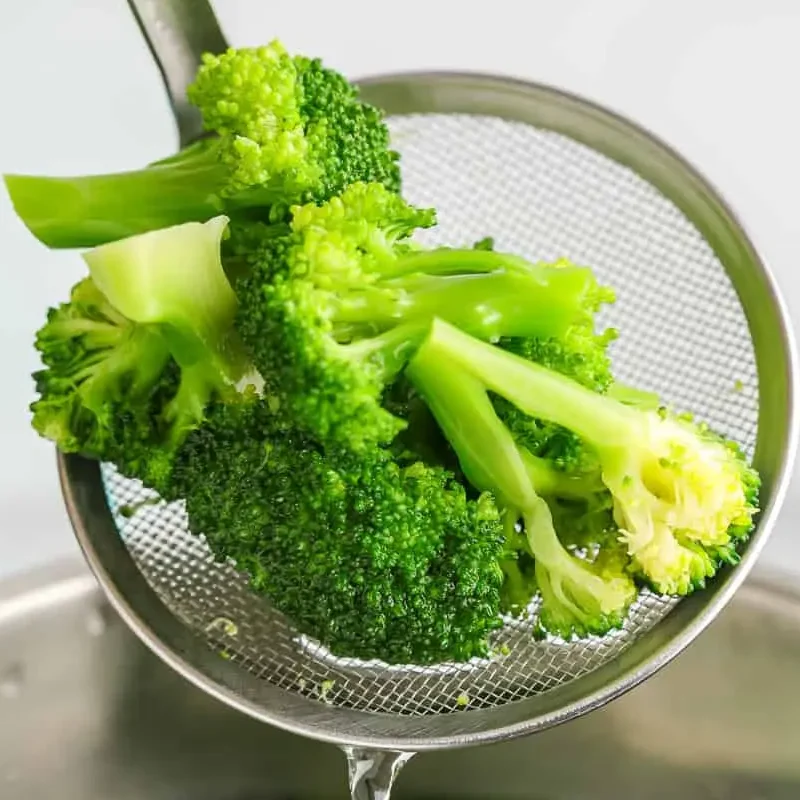
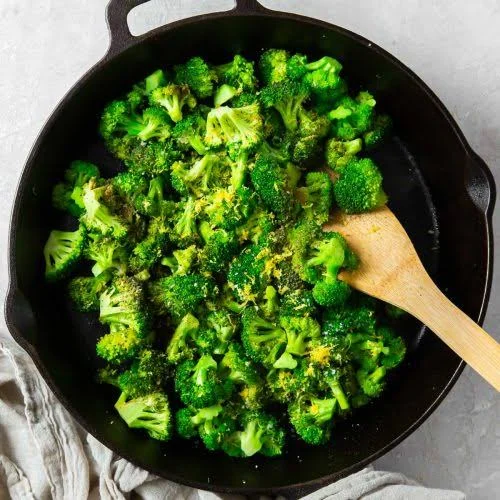
Blanching means dropping the vegetables into boiling water for 60 to 90 seconds, then immediately transferring them to an ice bath. This does two things. First, it partially cooks the hard vegetables so they finish quickly in the wok. Second, it locks in the bright green color by deactivating the enzymes that cause browning .
Chef Shirley Chung told Tasting Table that this is the step that makes restaurant stir-fry vegetables taste different. The vegetables come out crisp and sweet, not wilted and dull .
You do not have to blanch everything. Soft vegetables like snow peas, bell peppers, and mushrooms cook fast enough on their own. But hard vegetables like broccoli, carrots, cauliflower, and green beans benefit from the blanch. It takes an extra pot and a few minutes. The result is worth it.
After blanching, dry the vegetables thoroughly. This is critical. If they go into the wok wet, you are back to steaming.
How to Build Your Stir-Fry in the Right Order
Stir-fry is not a dump-everything-in method. It is a sequence. Each ingredient goes in when the pan is ready for it.
Start With the Aromatics
Garlic and ginger go first. But they only need 5 to 10 seconds. You want them fragrant, not burnt. If they start to brown, the pan is too hot or you left them in too long. Add them right before the vegetables so they perfume the oil without scorching .
Cook Hard Vegetables First
Carrots, broccoli stems, cauliflower, and green beans need the most time. If you blanched them, they only need a minute or two in the wok to get a sear. If you did not blanch them, they need longer, which means you should cook them alone in the pan first, then remove them before cooking the softer vegetables.
Then Medium Vegetables
Bell peppers, zucchini, mushrooms, and onions go next. They need a minute or two to soften slightly and get some char.
Soft Vegetables and Greens Last
Snow peas, bok choy, spinach, and scallions go in at the very end. They need only 30 seconds to a minute. They should stay bright and crisp.
Sauce at the Very End
Push the vegetables to the side of the pan. Pour the sauce into the center. Let it bubble and thicken for a few seconds. Then toss everything together and turn off the heat. Serve immediately .
The Master Stir-Fry Sauce Formula
You do not need a specific recipe. You need a ratio.
2 parts soy sauce or tamari + 1 part acid + 1 part sweetener + a splash of water or stock + a cornstarch slurry
The acid can be rice vinegar, Shaoxing wine, or lime juice. The sweetener can be sugar, honey, or maple syrup. The cornstarch slurry is what makes the sauce glossy and thick instead of watery. Mix 1 teaspoon of cornstarch with 1 tablespoon of cold water before adding it to the pan .
The slurry is the trick that makes stir-fry sauce cling to the vegetables instead of pooling at the bottom. When the cornstarch hits the hot liquid, it thickens almost instantly. The sauce goes from watery to silky in about 30 seconds .
What If You Are Using Frozen Vegetables?
Frozen vegetables can work. But you have to change your approach.
Do not thaw them. Thawing draws water to the surface and guarantees sogginess. Instead, add the frozen vegetables directly to a screaming hot pan. The heat will evaporate the ice crystals before they have a chance to turn into a puddle .
Cook them in small batches. Frozen vegetables release more water than fresh ones. If you crowd the pan, they will steam. Give them space. Let them sit undisturbed for a couple of minutes so they can sear before you start stirring .
Use a high smoke point oil. Avocado, grapeseed, or peanut oil. Olive oil will burn at stir-fry temperatures and taste bitter .
The Master Stir-Fry Recipe
This is the technique in recipe form. Use any vegetables you have. The formula works with whatever is in your fridge.
Prep time: 10 minutes
Cook time: 8 minutes
Total time: 18 minutes
Servings: 4
Ingredients:
- 4 cups mixed vegetables, cut into bite-sized pieces (broccoli, carrots, bell peppers, snow peas, mushrooms, bok choy)
- 2 tablespoons high smoke point oil (avocado, peanut, or grapeseed)
- 3 cloves garlic, minced
- 1 tablespoon fresh ginger, grated
For the sauce:
- 3 tablespoons soy sauce or tamari
- 1.5 tablespoons rice vinegar
- 1.5 tablespoons honey or sugar
- 2 tablespoons water or stock
- 1 teaspoon cornstarch mixed with 1 tablespoon cold water
Instructions:
- Dry the vegetables thoroughly with a clean towel. If using hard vegetables like broccoli or carrots, blanch them in boiling water for 60 to 90 seconds, then transfer to an ice bath. Drain and dry again.
- Heat a wok or large skillet over the highest heat your stove can manage. Wait 2 to 3 minutes until the pan is smoking hot.
- Add the oil. It should shimmer immediately.
- Add the garlic and ginger. Stir for 5 to 10 seconds until fragrant. Do not let them brown.
- Add the hard vegetables first. Spread them in a single layer. Let them sit for 30 seconds, then stir. Cook for 1 to 2 minutes until they have some char.
- Add the medium vegetables. Stir and cook for 1 to 2 minutes.
- Add the soft vegetables and greens. Stir for 30 seconds to 1 minute.
- Push the vegetables to the side of the pan. Pour the sauce into the center. Let it bubble for 10 seconds.
- Stir the cornstarch slurry again, then pour it into the bubbling sauce. Stir everything together. The sauce will thicken in about 30 seconds.
- Turn off the heat. Serve immediately over rice or noodles.
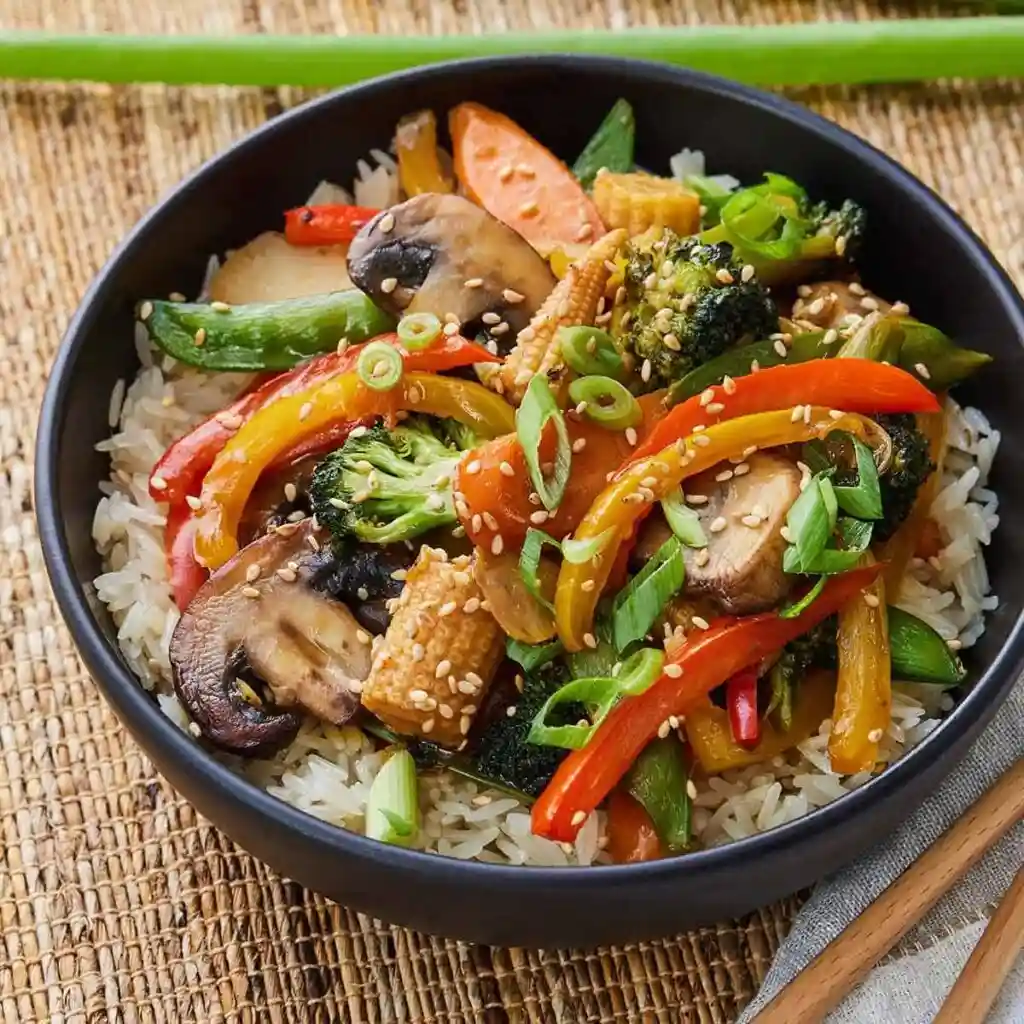
Crispy stir-fry vegetables come down to three things: dry vegetables, a screaming hot pan, and small batches. Blanch the hard vegetables first if you have time. Build the stir-fry in stages. Add the sauce at the very end with a cornstarch slurry for gloss.
It takes a little more attention than dumping everything in a pan. But the result is a plate of vegetables that snap when you bite them. Bright green. Glossy. Full of flavor. The kind of stir-fry you would get at a restaurant, made in your own kitchen.
Try it once with this technique. You will never go back to the soggy version.