How to Cook Skillet Salmon with Perfect Crispy Skin

That first crackle when the fillet hits the pan tells you everything. The skin starts to turn gold. The kitchen smells like butter and the sea. In about fifteen minutes, you’ll have salmon that looks like it came from a restaurant but costs a fraction of the price.
Here’s the problem. Most people can cook chicken or steak without thinking. But fish feels different. It’s easy to overcook. It sticks to the pan. That skin you paid extra for turns out soft and sad. The experts at Food & Wine put it simply: the only real mistake with salmon is cooking it too long . This guide fixes that. You’ll learn the exact technique that test kitchens use: a hot pan, a dry fillet, and patience. No fancy tools required.

What You Need for Pan-Seared Salmon
Ingredients
- 2 center-cut salmon fillets, skin-on (6 oz / 170g each, about 1 to 1¼ inches thick)
- 1 to 2 tablespoons neutral oil with a high smoke point (avocado, grapeseed, or canola)
- Kosher salt and freshly cracked black pepper
- Optional for basting: 1 tablespoon unsalted butter, 2 smashed garlic cloves, a few sprigs of fresh thyme or rosemary
What to Know About These Ingredients
Skin-on is the way to go. The skin protects the delicate flesh and turns into the best part of the dish . If you only have skinless fillets, you can still use this method, but you’ll miss the crispy layer.
Center-cut fillets cook evenly. They’re the same thickness from end to end. That means no dry spots and no raw spots .
Substitutions and Swaps
Dairy-free: Skip the butter. Baste with extra oil mixed with garlic and herbs instead.
Wild vs. farmed: Wild salmon (sockeye, coho) is leaner and cooks faster. Start checking it one to two minutes earlier than you would for farmed Atlantic salmon.
Equipment
You need a heavy skillet. Cast iron is ideal because it holds heat evenly and gives you that restaurant-quality crust . A stainless steel pan works too. A fish spatula makes flipping easy. Its thin, flexible edge slides under the fish without breaking it. A paper towel is non-negotiable. And an instant-read thermometer takes the guesswork out of doneness.
How to Cook Skillet Salmon Step by Step
Step 1: Take the Chill Off
Pull the salmon from the fridge fifteen minutes before cooking. Cold fish hitting a hot pan can stick. Letting it sit at room temperature helps it cook evenly from edge to center .
Step 2: Dry It Like You Mean It
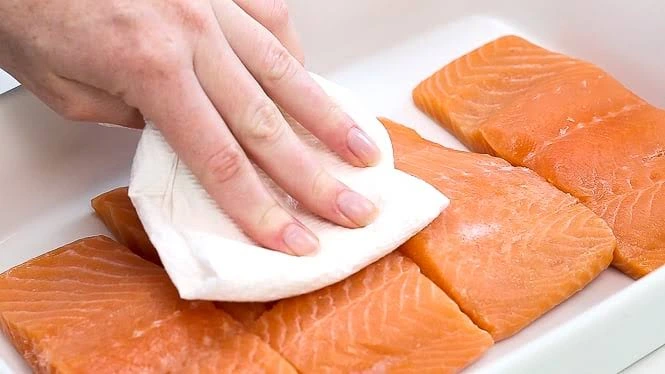
Pat the fillets completely dry with paper towels. Every surface. Especially the skin. Moisture is the enemy of crispy skin. If the skin is wet, it steams instead of sears . Season both sides generously with salt and pepper.
Step 3: Get the Pan Ripping Hot
Place your skillet over medium-high heat. Let it heat for about three minutes. Add the oil and swirl to coat the bottom. You’re ready when the oil shimmers and moves like water. If you flick a drop of water in, it should skitter across the surface .
Step 4: Lay It Down Skin-Side Down
Gently place the fillets in the pan, skin-side down. Lay them away from you so any splatter doesn’t hit your arm. Press gently with your spatula for about ten seconds. This keeps the skin from curling up and ensures full contact with the hot pan .
Step 5: The Hardest Part: Leave It Alone
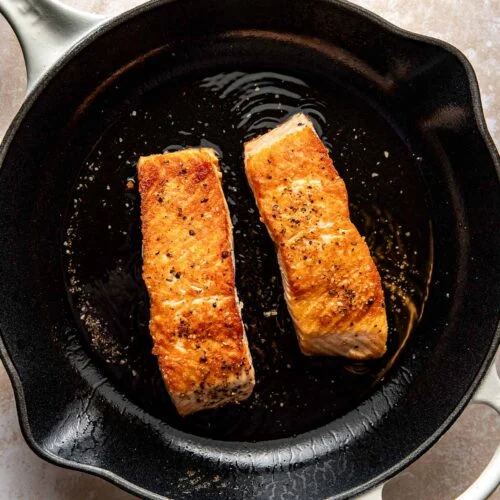
Let the fish sear undisturbed for 5 to 7 minutes for a one-inch fillet. You’ll see the color changing. The flesh turns opaque from the bottom up. The skin will release naturally when it’s ready. If it sticks when you try to peek, it needs more time .
Step 6: Flip and Baste
Once the skin is deep golden and releases easily, flip the fillet gently. If you’re using butter, garlic, and herbs, add them now. Tilt the pan and spoon the foaming butter over the flesh for one to two minutes .
Step 7: Check the Temperature and Rest
For medium-rare, which gives you the silkiest texture, pull the salmon when the thickest part reads 125°F (52°C) on your thermometer . Let it rest on a plate for two minutes. The temperature will rise a few degrees as it sits.
How to Know Your Skillet Salmon Is Done
The USDA recommends cooking fish to 145°F (63°C) for safety . That temperature gives you fully cooked, opaque salmon. But many cooks prefer medium-rare for the best texture.
At 125°F (52°C) , the center is still slightly translucent and rosy. The flesh flakes but stays juicy. At 145°F, it’s firm and opaque all the way through. Both are safe. It comes down to what you like .
Visual cue: The color should creep about 75% up the side of the fillet before you flip. That’s your signal that the skin is crisped and the fish is ready to turn .
Expert Tips and Common Mistakes

Start with room-temperature fish. Cold fish sticks. Room-temp fish cooks evenly .
Don’t crowd the pan. If the fillets are touching, they’ll steam instead of sear. Use a pan big enough to give each piece space.
Ignore the white stuff. That white protein oozing out is called albumin. It’s harmless. But it’s a sign of high heat or overcooking. Cooking to medium and starting with room-temp fish keeps it minimal .
Wild salmon needs less time. Sockeye and coho are leaner and thinner. Start checking them a minute or two earlier than farmed Atlantic salmon.
Use the right spatula. A fish spatula is thin, flexible, and slotted. It slides under the delicate skin without tearing it.
Skillet Salmon Variations to Try
Lemon-Dill: Squeeze fresh lemon juice and add chopped dill to the butter baste.
Spicy Chili Crisp: Spoon chili crisp over the salmon after flipping. The heat and crunch work great with the rich fish.
Asian-Inspired: Baste with a mix of soy sauce, honey, and sesame oil. This combo is popular right now. One version with honey, soy, and garlic takes just 22 minutes total . Another uses soy, sesame oil, garlic, ginger, and chili for a quick marinade .
Herb-Infused: Toss rosemary or thyme in the pan while the butter foams. The herbs perfume the whole fillet.
Storage and Reheating
Fridge: Store cooked salmon in an airtight container for up to three days.
Reheating: The best way is gently in a skillet over low heat. You can also eat it cold, flaked over a salad. Avoid the microwave. It makes the fish rubbery.
Make-ahead: You can season the fish and leave it uncovered in the fridge for up to two hours before cooking. The dry air helps the skin stay dry.
Freezing: Cooked salmon freezes well. Wrap it tightly and freeze for up to three months. Thaw overnight in the fridge.
What to Serve With Skillet Salmon
Light and fresh: Arugula salad with lemon vinaigrette. Roasted asparagus. A chilled cucumber salad .
Hearty: Baby potatoes with dill. Steamed rice. Quinoa.
Wine: An oaky Chardonnay or a crisp Sauvignon Blanc both work well .
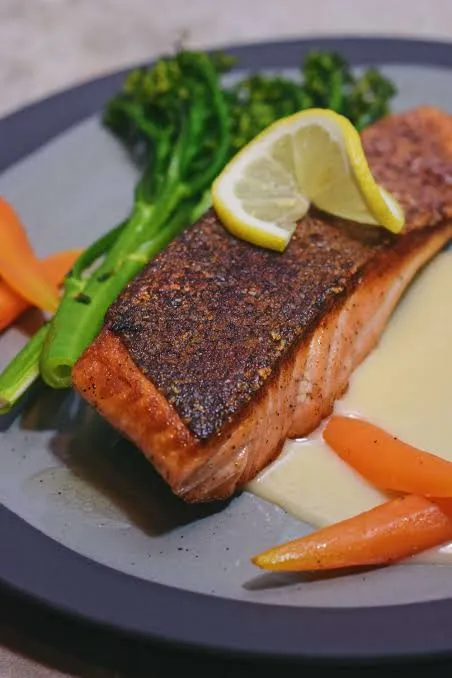
Skillet salmon is one of those skills that pays off forever. Once you nail the crispy skin and the silky center, you’ll wonder why you ever ordered it at a restaurant. The method is simple. Dry the fish. Get the pan hot. Don’t touch it until it’s ready. Check the temperature.
Give it one try. You’ll see.
Did you make this? Rate the recipe and leave a comment. Or pin it for your next busy weeknight.