How to Get a Restaurant-Quality Sear in Cast Iron
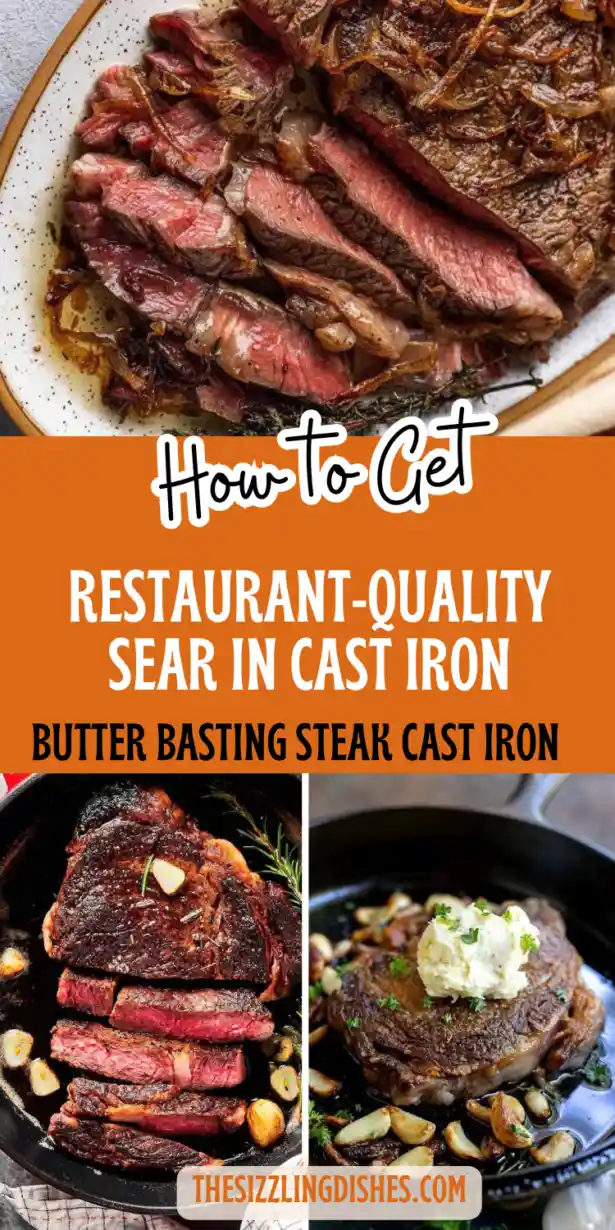
You have the steak. You have the pan. The crust is not happening. Maybe you got a grey ring around the edge. Maybe it stuck. Maybe the outside burned before the inside even started cooking. This guide fixes that.
The problem is almost never the steak. It is the heat. Most people either go too hot or not hot enough. The sweet spot is narrower than you think. Get it right and you get a crust that cracks when you slice it, with an inside that is edge to edge pink. Get it wrong and you get something that looks and tastes nothing like what you paid for.
By the end of this you will know exactly what temperature to aim for, when to add oil, why butter goes in last, and the one step most recipes skip that makes the crust almost foolproof. Ten minutes of active cooking. A rest. Then you eat.
Why Your Steak Comes Out Grey Instead of Brown
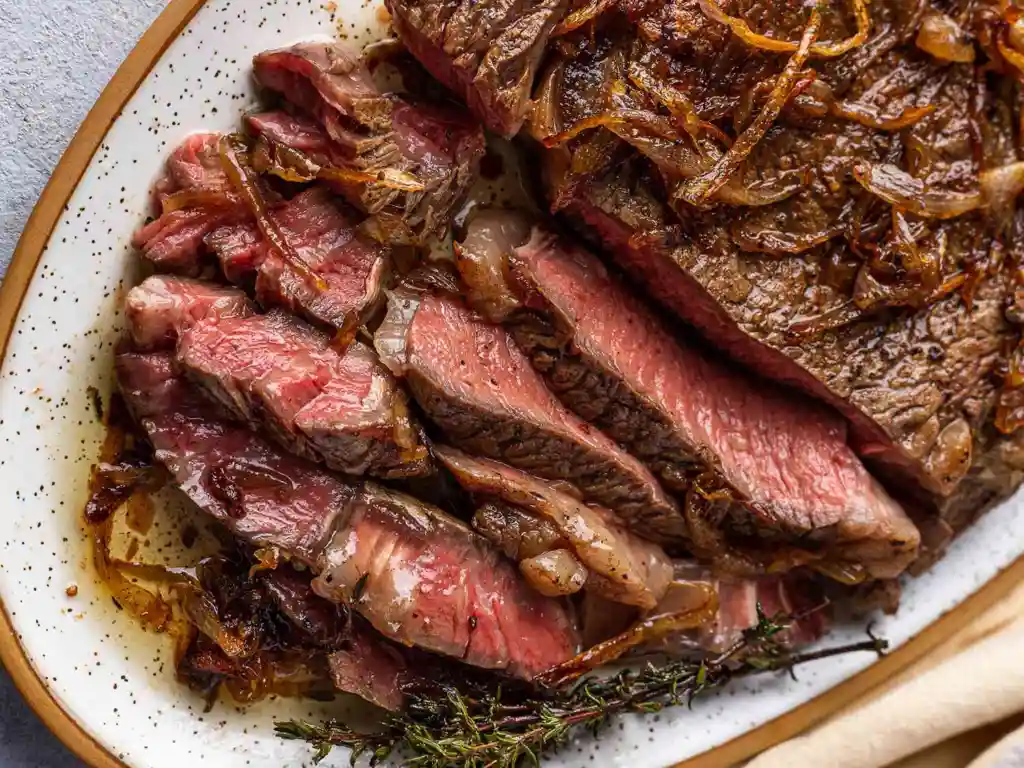
The Maillard reaction starts at 285°F. Below that, you are not searing. You are warming the meat until it turns grey . Go too far above that and the outside burns before the inside catches up.
Most recipes say “high heat.” That is not specific enough. The real target for cast iron steak is somewhere between 280°F and 330°F on the pan surface . That range triggers browning without burning the oil or the crust. If your stovetop dial goes to 10, medium low is usually around 3 or 4. If you have an infrared thermometer, you can stop guessing.
The other mistake is adding oil to a cold pan. Oil that heats with the pan breaks down before you even start cooking. The oil should go in after the pan is hot, not before .
What You Need Before You Start
- Steak: 1.5 to 2 inches thick. Ribeye, NY strip, or filet. Thinner cuts cook too fast to build a crust.
- Salt: Kosher salt for dry brining.
- Oil: Avocado oil (smoke point around 520°F) or grapeseed (around 400°F). Not extra virgin olive oil .
- Butter: Unsalted. It goes in at the end for basting.
- Aromatics: Smashed garlic cloves, fresh thyme or rosemary.
- Cast iron skillet: 10 to 12 inches. Preheated dry.
- Thermometer: An instant read meat thermometer is essential. An infrared thermometer for the pan is helpful but optional.
How to Sear a Steak in Cast Iron (Step by Step)
Step 1: Dry Brine If You Have Time
Pat the steak dry. Salt all sides generously with kosher salt. Put it on a wire rack over a sheet pan. Leave it uncovered in the fridge for at least 8 hours, up to 24. This pulls surface moisture out and seasons the meat deep .
If you do not have time, salt it right before cooking. Do not salt 10 minutes before. That is when the surface is wettest.
Step 2: Dry the Surface Completely
Take the steak out of the fridge 45 minutes before cooking. Pat it dry with paper towels. Then pat it again. The surface should feel tacky, almost sticky. Any wetness will steam the steak instead of searing it.
Step 3: Preheat the Pan Dry
Put the empty cast iron skillet on the burner over medium low heat. Let it heat for 5 to 7 minutes. Cast iron takes longer to heat evenly than other pans. This step is where most people get impatient and rush .
If you have an infrared thermometer, aim for 280°F to 330°F. If not, flick a few drops of water on the surface. They should dance and bead up, not sit and bubble slowly .
Step 4: Add Oil at the Right Moment
Add your high smoke point oil after the pan is hot. It should shimmer almost right away. If it smokes aggressively the second it hits the pan, the pan is too hot. Pull it off the heat for a minute and try again.
Step 5: Sear Without Moving It
Lay the steak in the pan. Press gently for 2 to 3 seconds to make sure the whole surface makes contact. Then leave it alone. Do not press it. Do not move it. Do not flip it every 30 seconds .
Sear for 2 to 3 minutes. When the crust has formed, the steak will release from the pan on its own. If it sticks when you try to flip, give it 30 more seconds. It will let go.
Step 6: Flip Once
Flip the steak with tongs. You should see a deep brown crust. Sear the second side for 2 to 3 minutes. One flip is enough .
Step 7: Render the Fat Edge
Hold the steak on its side with tongs. Press the fat cap against the hot pan for about 30 seconds. This renders the fat and gives you another strip of crust.
Step 8: Butter Baste
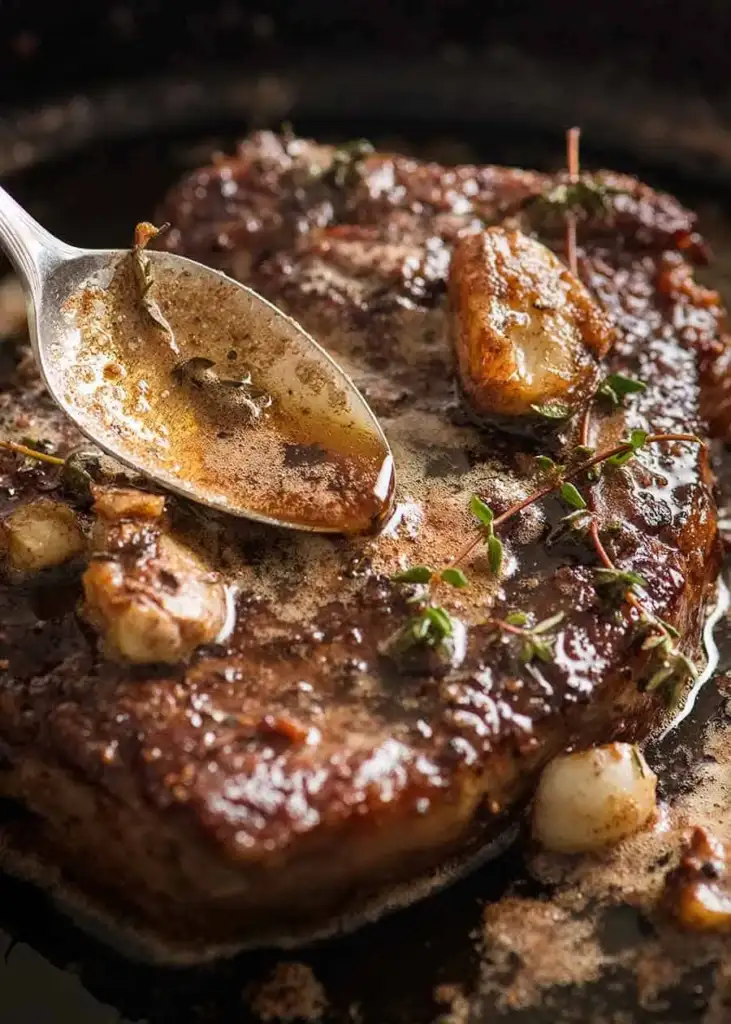
Turn the heat down to medium low. Add 2 tablespoons of butter, the smashed garlic, and the thyme sprigs. As the butter melts and foams, tilt the pan toward you. Spoon the butter over the steak again and again for 1 to 2 minutes .
The butter should foam, not burn. If it starts to brown too fast, pull the pan off the heat for a few seconds.
Step 9: Check the Temperature
Insert an instant read thermometer into the thickest part of the steak, away from bone or fat. For medium rare, pull it at 130°F to 135°F. The USDA says 145°F with a 3 minute rest for safety, but most steak eaters prefer the lower range .
Step 10: Rest on a Rack
Put the steak on a wire rack, not a flat plate. A plate traps steam and softens the crust. A rack lets air circulate. Rest for 5 minutes per inch of thickness. A 1.5 inch steak rests about 8 minutes .
Step 11: Slice Against the Grain
Slice across the grain. Drizzle the pan butter over the slices. Eat.
Doneness Cues That Do Not Rely on Time
- Crust: Deep brown, dry to the touch, releases from the pan without force.
- Smell: Nutty and toasted. That is the Maillard reaction.
- Butter: Foams and smells like toasted nuts, not burnt.
- Internal temp: 130°F to 135°F for medium rare. Check the center, not the edge.
Common Mistakes That Ruin the Sear
Heating the Pan With Oil Already In It
Oil added to a cold pan breaks down before the pan gets hot enough. The pan should be hot first, then the oil .
Using the Wrong Oil
Extra virgin olive oil has a low smoke point. It burns before the steak sears. Use avocado, grapeseed, or beef tallow.
Flipping Too Often
Every time you flip, the surface temperature drops. One flip per side builds a better crust than constant fussing .
Cutting Too Soon
The juices need 5 to 10 minutes to redistribute. Cut early and they run onto the board instead of staying in the meat.
Not Drying the Surface
A wet steak steams. A dry steak sears. Pat it dry, then pat it again.
Variations Worth Trying
Reverse Sear for Thick Cuts: For steaks 2 inches or thicker, cook in a 250°F oven until the internal temp is 10°F to 15°F below target. Then sear in the cast iron for 60 to 90 seconds per side. This gives you edge to edge doneness with almost no grey band .
Oven Finish: Sear both sides on the stovetop, then move the whole pan to a 350°F oven until the steak hits your target temp. Good for thicker cuts when you want a hands off finish.
Herb Swaps: Rosemary and garlic. Thyme and shallot. Black pepper crust for au poivre style.
Other Proteins: This method works on thick pork chops and duck breast. For duck, start skin side down and render longer.
What to Serve With It
Steakhouse sides: creamed spinach, truffle fries, a wedge salad with blue cheese.
Lighter: arugula with lemon vinaigrette, roasted asparagus, grilled radicchio.
Sauce: chimichurri, peppercorn cream, or a quick red wine reduction made in the same pan after the steak rests.
Restaurant-Quality Cast Iron Steak
Thick cut steak seared in cast iron with a deep butter basted crust and even medium rare interior.
Prep Time: 10 minutes (plus optional 8 to 24 hour dry brine)
Cook Time: 12 minutes
Total Time: 30 minutes active
Servings: 1 to 2
Ingredients:
- 1 thick cut steak (1.5 to 2 inches), ribeye, NY strip, or filet
- 1 ½ tsp kosher salt
- 1 tsp freshly cracked black pepper
- 1 tbsp avocado oil or grapeseed oil
- 2 tbsp unsalted butter
- 2 garlic cloves, smashed
- 2 to 3 sprigs fresh thyme
Instructions:
- Dry brine: Salt steak generously. Refrigerate uncovered on a wire rack 8 to 24 hours.
- Remove from fridge 45 minutes before cooking. Pat completely dry.
- Preheat empty cast iron skillet over medium low heat 5 to 7 minutes. Target 280°F to 330°F.
- Add oil to hot pan. It should shimmer immediately.
- Lay steak in pan. Press gently for 2 to 3 seconds. Do not move. Sear 2 to 3 minutes.
- Flip once. Sear second side 2 to 3 minutes.
- Hold steak on fat edge with tongs. Sear 30 seconds.
- Reduce heat to medium low. Add butter, garlic, thyme. Baste continuously 1 to 2 minutes.
- Check internal temp. Pull at 130°F to 135°F for medium rare.
- Rest on wire rack 5 to 10 minutes.
- Slice against the grain. Serve with pan butter.
Nutrition (per serving, estimate): Calories 680, Protein 62g, Fat 46g, Carbs 1g
Notes: Dry brine overnight for the best crust. Rest before slicing. Use an instant read thermometer to nail doneness.
You do not need a restaurant broiler. You need a hot pan, a dry steak, the right oil, and the patience to not touch it for a few minutes. Preheat the pan dry. Add oil after. Sear undisturbed. Baste with butter and herbs. Rest. Slice.
The first time you nail it, you will know. The crust will sound different when the knife hits it. Try the reverse sear for thick cuts if you want to go deeper. And if you try this, come back and tell me how the crust turned out.