How to Scale Down a Recipe for Two (With a Free Conversion Chart)
You found a great recipe, but it feeds eight. You’re cooking for two. Now you’re staring at “3 eggs” and wondering how to use one and a half of them.
I’ve been there. The first time I tried to scale down a recipe for two, I halved the ingredients and kept the big pan. The sauce burned before I finished chopping the onion. The next time, I halved everything but the salt and ate a bowl of bland soup. Both times I wasted food and felt silly.
This guide fixes that. You’ll learn how to find the right math, handle eggs, pick the right pan, and adjust the cook time so dinner comes out right. It also has a free conversion chart you can screenshot and save to your phone.
The method works because it follows the same order every time. Do the math once, write it down, then adjust the three things that don’t shrink evenly: seasoning, pan size, and time. The hands-on part takes about 10 minutes. Grab your recipe and a pen.
- Pick a recipe that shrinks well
- Divide the servings to find your scaling number
- Copy the recipe and write the new amounts
- Halve the simple ingredients first
- Use the conversion chart for odd measurements
- Split the egg the right way
- Season with less than half, then taste
- Swap to a smaller pan
- Shorten the cook time and check early
- Write down what worked
Step 1: Pick a recipe that shrinks well

Soups, stews, chili, pasta sauces, stir-fries, and sheet-pan dinners are the best place to start. They forgive small math slips. Cakes, bread, and custards are harder, because they depend on exact ratios and the right pan size. Save those for later. Your first scale-down should be a dish where a little extra salt or a few extra minutes won’t ruin dinner.
Step 2:Divide the servings to find your scaling number
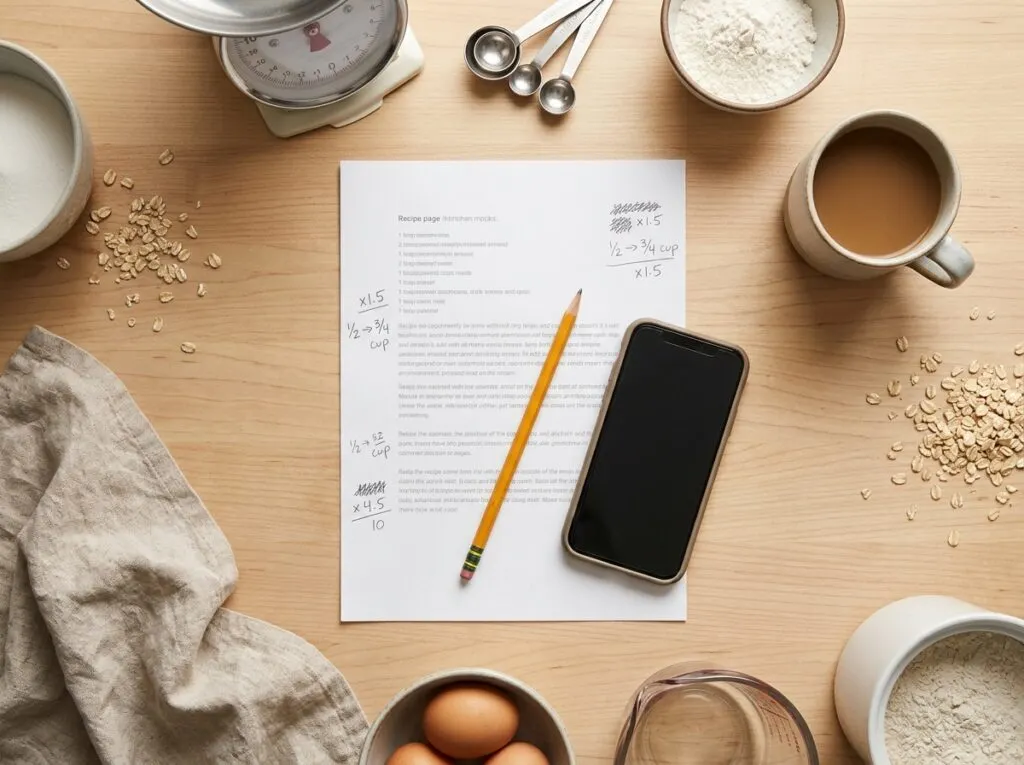
Two numbers decide everything: how many servings the recipe makes, and how many you want. Divide the second by the first. The answer is your scaling number.
- Recipe serves 4: 2 ÷ 4 = ½ (half)
- Recipe serves 6: 2 ÷ 6 = ⅓ (a third)
- Recipe serves 8: 2 ÷ 8 = ¼ (a quarter)
No serving count listed? Look at the main ingredient. Four chicken breasts usually feed four people.
Step 3:Copy the recipe and write the new amounts beside each line

Print it, or screenshot it into your notes app. Then write the new amount next to every ingredient before you turn on the stove. Your hands will be messy mid-cooking, and your phone will be across the counter. That is when mental math goes wrong.
Use a second color of ink for the new numbers so the old ones don’t sneak back in. If an amount looks strange, like ⅜ cup, leave it blank for now. Step 5 has a chart for those.
Step 4:Halve the simple ingredients first

Anything that divides cleanly goes first. 2 cups of broth becomes 1 cup, 1 pound of chicken becomes 8 ounces, and 4 cloves of garlic becomes 2. Cross each line off as you go. This leaves you with a short list of odd amounts, and that list is the only part where you need help. Round whole items like onions or peppers to the nearest half.
Measurements like ⅔ cup or ¾ teaspoon are where beginners freeze. Find your original amount in the left column, then read across to your scaling number from Step 2. Screenshot this chart now. You will use it every time you scale a recipe.
Step 5: Use the conversion chart for odd measurements

Measurements like ⅔ cup or ¾ teaspoon are where beginners freeze. Find your original amount in the left column, then read across to your scaling number from Step 2. Screenshot this chart now. You will use it every time you scale a recipe.
| Original | ½ (serves 4 → 2) | ⅓ (serves 6 → 2) | ¼ (serves 8 → 2) |
|---|---|---|---|
| 1 cup | ½ cup | 5 tbsp + 1 tsp | ¼ cup |
| ¾ cup | 6 tbsp | ¼ cup | 3 tbsp |
| ⅔ cup | ⅓ cup | 3½ tbsp | 2 tbsp + 2 tsp |
| ½ cup | ¼ cup | 2 tbsp + 2 tsp | 2 tbsp |
| ⅓ cup | 2 tbsp + 2 tsp | about 1 tbsp + 2 tsp | 1 tbsp + 1 tsp |
| ¼ cup | 2 tbsp | 1 tbsp + 1 tsp | 1 tbsp |
| 1 tbsp | 1½ tsp | 1 tsp | ¾ tsp |
| 1 tsp | ½ tsp | ⅓ tsp (a scant ½ tsp) | ¼ tsp |
| ½ tsp | ¼ tsp | a generous pinch | ⅛ tsp (a pinch) |
Step 6:Split the egg the right way

You cannot cut a raw egg in half with a knife. Crack it into a small bowl and beat it with a fork until the yolk and white are fully mixed. One large egg is about 3 tablespoons of liquid, so that is your measuring guide. Use 1½ tablespoons for half an egg, 1 tablespoon for a third, and 2 teaspoons for a quarter.
No measuring spoons nearby? Weigh the beaten egg. One large egg is about 50 grams, so half is 25 grams.
Step 7:Season with less than half, then taste
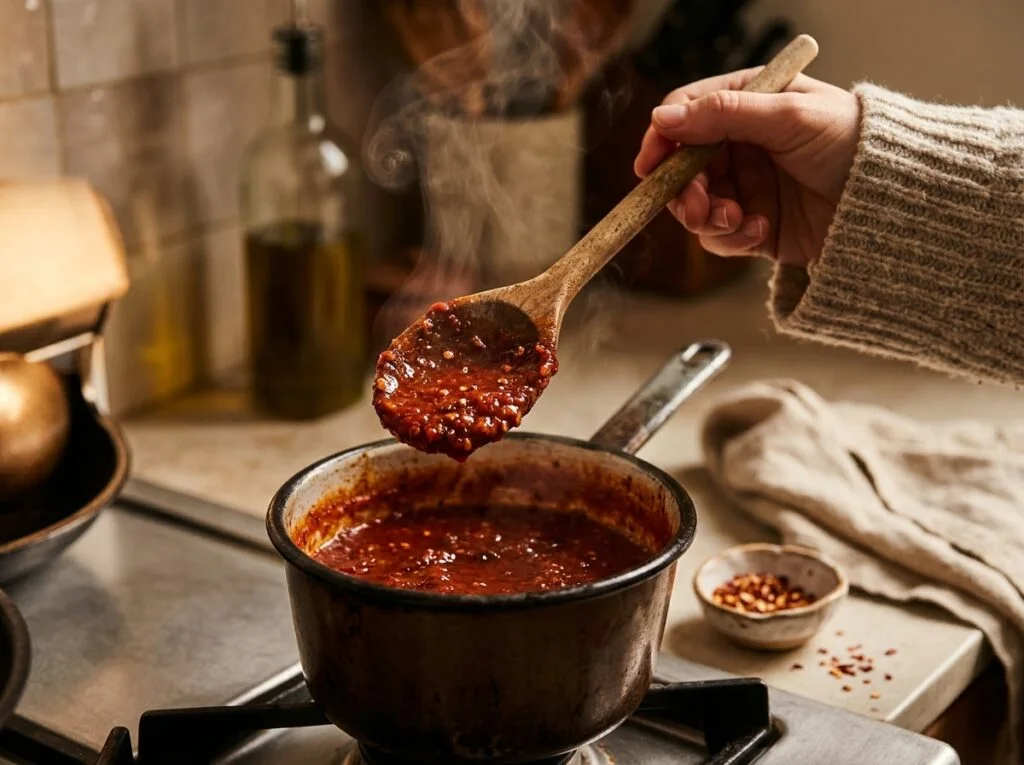
Salt and spice do not shrink in a perfectly straight line, and you can add more but you can never take it out. Measure the halved amount from your list, then put in only about three-quarters of it at first. Stir, let it cook for 2 minutes, and taste from a clean spoon. Add the rest a pinch at a time. Garlic, cayenne, and chili flakes get stronger as they simmer, so wait before deciding the dish needs more heat.
Step 8:Swap to a smaller pan
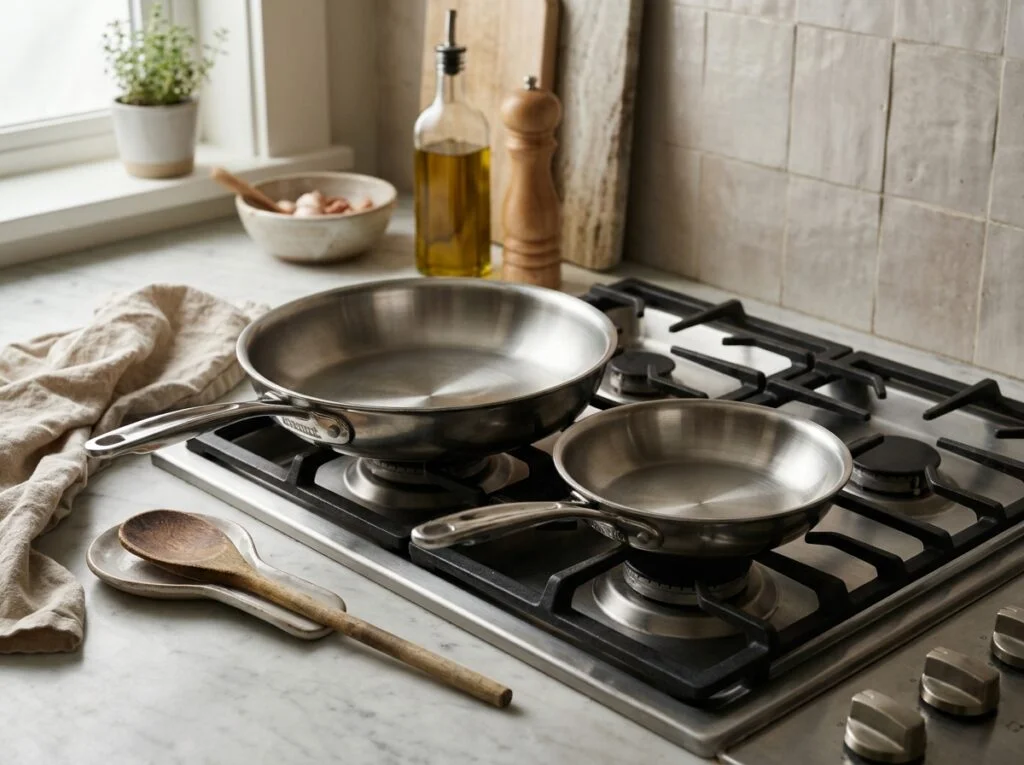
If you keep the original pan, half the food spreads thin, the liquid dries out, and the bottom burns before the middle cooks. A smaller pan keeps the food at the same depth as the full recipe. Match your pan to the chart below.
No smaller pan in the cupboard? Fold a strip of heavy foil into a thick wall and set it inside your big dish. Fill only one side.
| Recipe Calls For | Half Recipe | Third Recipe |
|---|---|---|
| 🥘 9×13 inch baking dish | 8×8 inch pan or 9-inch round | 8½×4½ inch loaf pan |
| 🍳 12-inch skillet | 9 to 10 inch skillet | 8-inch skillet |
| 🍲 6-quart pot | 3-quart saucepan | 2-quart saucepan |
| 🍪 Full sheet pan (18×13) | Half sheet pan (13×9) | 8×8 inch pan, one layer |
Step 9:Shorten the cook time and check early

Plan to start checking at about two-thirds of the original time. A recipe that says 40 minutes gets its first look at 25 to 30 minutes. Small portions heat through faster, but the time does not drop by half either. Keep the oven or burner temperature the same as the recipe says.
Look for these signs before you pull the pan:
- Edges are bubbling or browned
- A knife slides into the center with no resistance
- Meat reaches 165°F for chicken, or the juices run clear
- The sauce coats the back of a spoon
Step 10:Write down what worked so you can scale down a recipe for two again

Right after dinner, while the meal is still fresh in your mind, grab the recipe you copied in Step 3. Write three notes in the margin: was it too salty or too bland, did the pan fit, and how many minutes did it really take? This takes about 2 minutes. Next time you will skip the guessing and start from your own numbers. Put a star next to any recipe that shrank well.
| If This Happens | Try This |
|---|---|
| 🏜️ It came out dry | Stir in 2 tablespoons of broth, sauce, or melted butter. Next time, use a smaller pan and check at two-thirds of the original time. |
| 😐 It tastes bland | Add salt ¼ teaspoon at a time, tasting after each one. A squeeze of lemon or a splash of vinegar also wakes up flat flavors. |
| 🔥 It’s burned outside, raw inside | Cover loosely with foil and cook 5 more minutes. Your dish is likely too deep for the heat, so use a wider, shallower pan next time. |
| 🍳 The bottom burned or stuck | Move the food to a clean pan without scraping the burned layer. Add ¼ cup of water or broth. The pan was probably too big, so the liquid dried out early. |
| 🌶️ It’s too spicy | Stir in a spoonful of plain yogurt, cream, or coconut milk. Serve it with rice or bread to calm the heat. |
Conclusion
You now know how to scale down a recipe for two without guessing at eggs, pans, or cook times. You did the math once, wrote it down, and adjusted the three things that don’t shrink evenly. Next time you scale down a recipe for two, it will take half the effort.
Try it with a soup or a sheet-pan dinner this weekend, since those forgive small slips. Save this guide to your Pinterest board so the conversion chart is there when you need it.